
Play, pan, repeat: Childhood on the goldfields
20 Oct, 2025
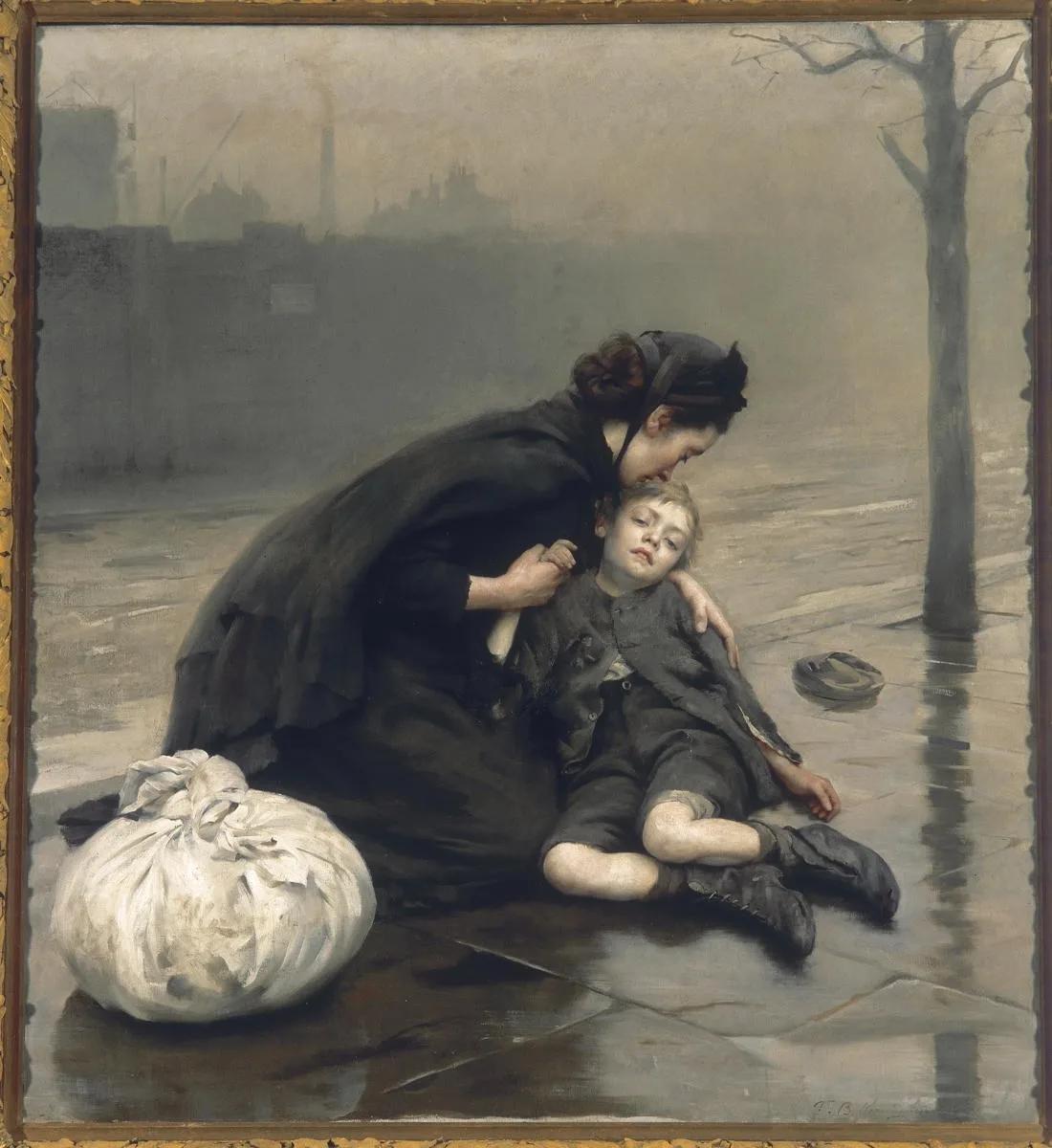
Step back in time for a moment. Imagine yourself in a narrow, sooty street of Victorian London. The air is thick with coal smoke. Sewers overflow. Families squeeze into one damp room, living hand-to-mouth. Children dart between factory walls and open drains, some no older than eight, already condemned to thirteen-hour shifts in mines and mills.
This was the Britain of the nineteenth century — the Britain many families were desperate to escape.
Childhood in Britain: Precious in name, perilous in reality
The Victorians believed children were treasures to be cherished. Yet the reality of industrial life told another story. Being a child in the nineteenth century was hazardous, particularly if you were born into a poor family.
Poverty robbed children of play, health, and often life itself. Education was not compulsory. It was a luxury, with only the wealthy able to afford tutors or boarding schools.
Sunday schools, run by religious groups, created the opportunity for poorer children to obtain some of the basics without interfering with their working lives.
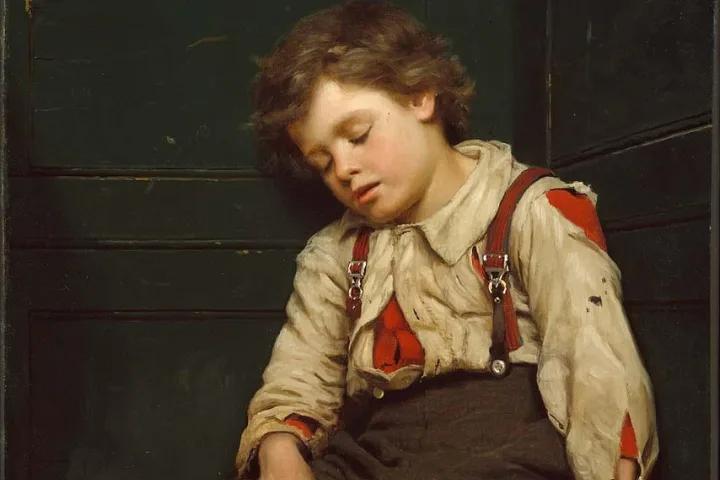
Instead, some children worked. In the 1840s most working-class children over the age of eight worked full time. Children provided cheap labour and were often used to do the jobs that adults could not do.
They crawled under machinery, opened ventilation doors deep in coal mines, or cleaned textile machines still humming with danger. It was normal for children to work up to 13 hours a day.
For parents, the choices were heartbreaking: send children to work and risk injury or starvation at home. In the absence of real alternatives, many families looked elsewhere — to lands across the sea.
One-way ticket to the unknown
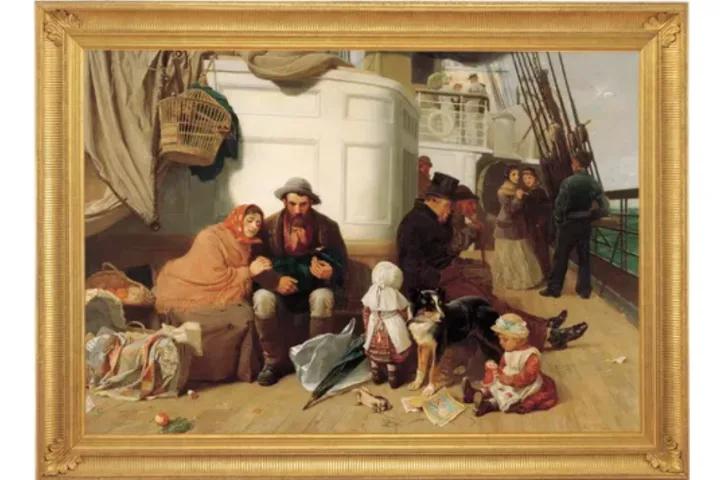
Emigration was more than a practical decision. It was an act of love.
Across Britain, Ireland, and Scotland, families devastated by famine, land clearances, or rural unemployment made the painful choice to leave.
The promise of gold in Australia whispered hope: a chance to escape the cycle of poverty, to claim a home, and to give children a brighter future.
Fifteen million people left Britain – many of whom found their way to the Australian goldfields. Mostly these were young men, but we know that some families travelled to the colonies as well.
It took extraordinary courage. The voyage was long and perilous, often six months across wild oceans.
Dirt, sweat, and gold
What awaited the children who made it to Victoria’s goldfields? What were the earliest generations of Australian children on the goldfields like?
Life was rough and unpredictable. As the nineteenth century progressed, social attitudes in the Australian colonies were more markedly sentimental towards children, and elevated the status of mothering and domesticity of the home.
The colonial child, on the whole, seemed in the first generation at any rate, to thrive.
The lifestyle, particularly on the diggings, appeared to encourage resourcefulness, independence, courage and initiative.
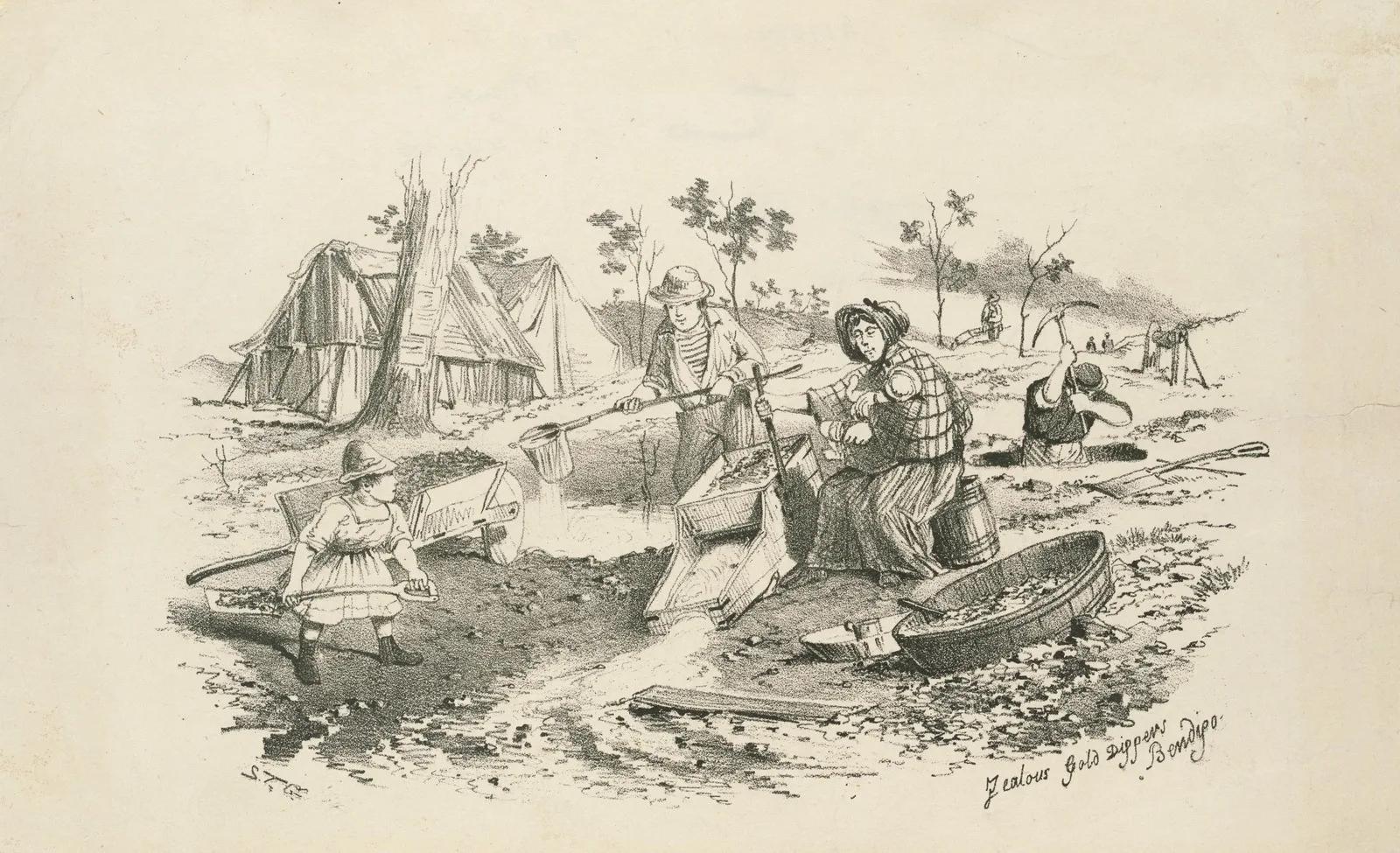
It became apparent that there were increased opportunities – in fact, requirements – for children to take on important tasks to relieve the workload of their busy, goldmining parents.
On the diggings, work and play blurred. Children fossicked for gold with puddling pans, “rocked the cradle” to separate soil from precious flakes, or searched mullock heaps for overlooked treasures. Some followed behind miners’ wheelbarrows, quick eyes scanning for fallen specks of gold. For many, it felt like a game — messy, exciting, and full of promise.
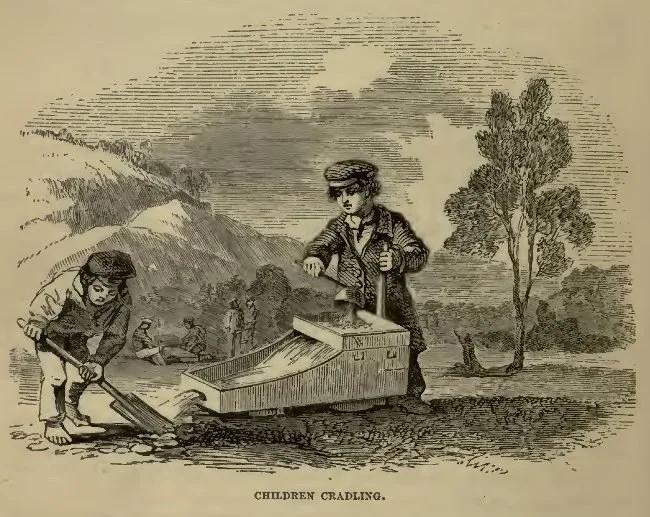
Although tent schools soon emerged on the Diggings, attendance could fluctuate dramatically. Education was not compulsory, and children were part of a transient population: they moved with their parents from one gold rush to the next.
Child’s play on the goldfields
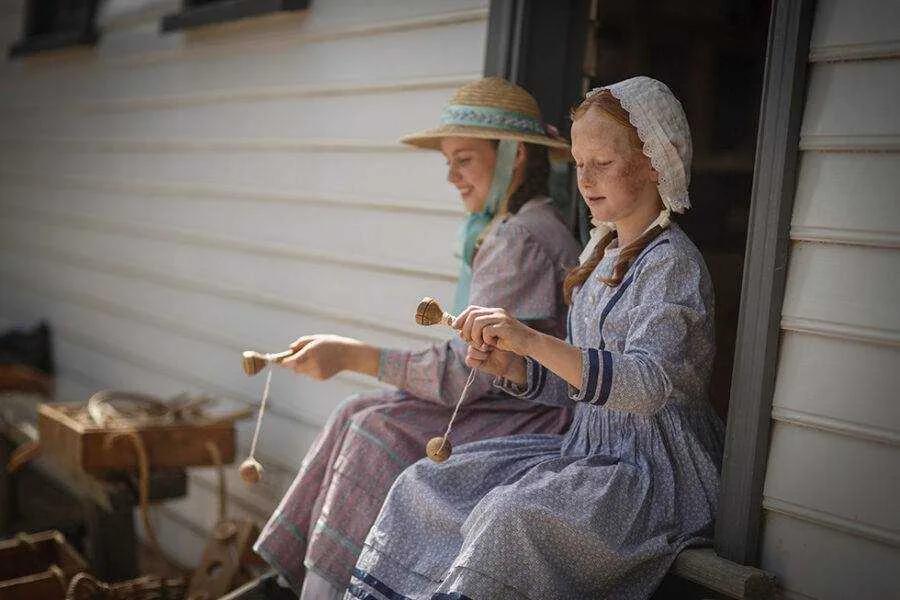
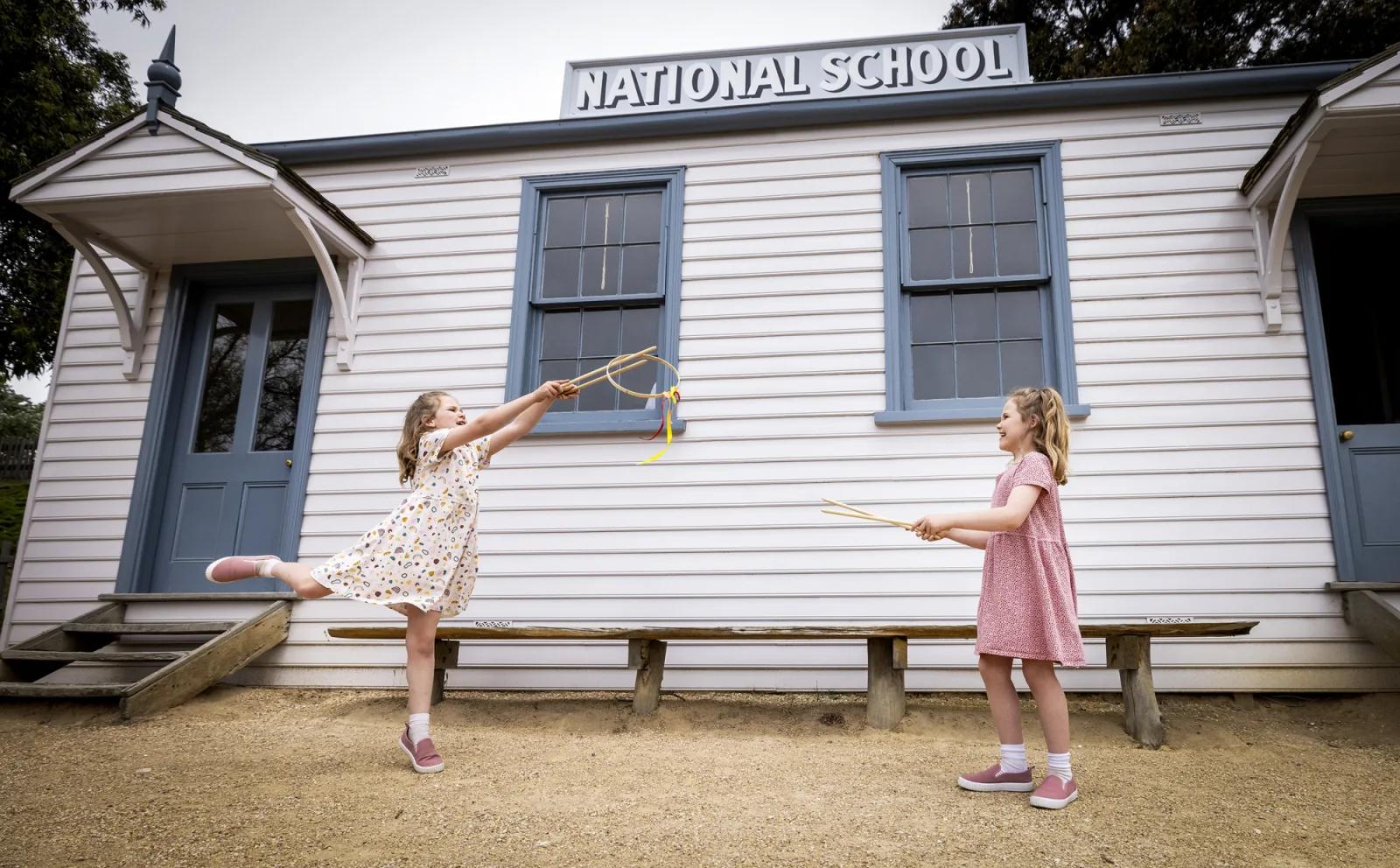
Amid the labour, children still found ways to play. Victorian toys, whether in Britain or the colonies, reflected the circumstances of a child’s world. Poor families made do with home made toys such as rag dolls and jacks made from knuckles of sheep. A lucky few might own a skipping rope, a hoop, or a set of marbles.
Outdoors, children invented games from whatever was at hand: rolling hoops down dirt tracks, fishing in creeks, or chasing one another through the fields.
For the wealthy, toys were more elaborate — miniature versions of the adult world, designed to teach the 'work ethic'.
Playing games was also a lesson in upholding gendered norms and responsibility. Dolls’ houses instructed girls in household management; toy soldiers, lead animals, and clockwork trains trained boys in discipline and control.
The making of ‘Young Australia’
Observers of the time noticed something different about colonial children. They were outspoken, independent, and unafraid of hard work.
Writer Richard Twopeny recognised their freedom of spirit, lack of respect for elders, and excellent practical skills. He argued that colonial parents indulged their children too much – and allowed them too much liberty.
This, he maintained, encouraged a certain roughness and wildness, and a distinct lack of regard for the finer points of social behaviour.
Others, like author Louisa Meredith, insisted that colonial girls learn every practical skill imaginable, “for no girl knows what vicissitudes may attend her lot in life.”
Step into their shoes
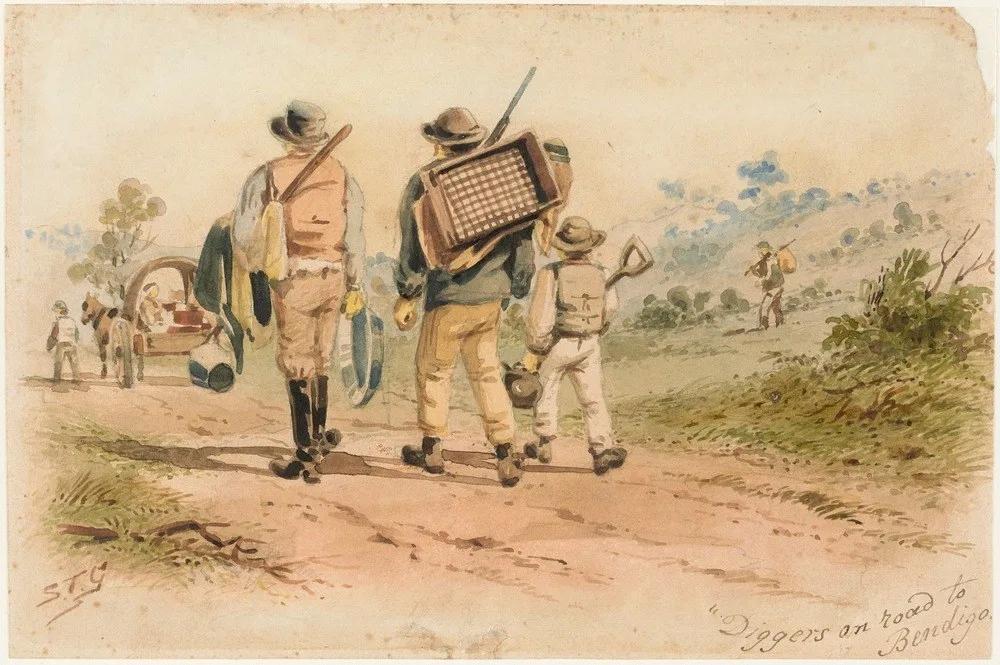
When you walk through Sovereign Hill today, past the tents, the diggings, and the schools, you can imagine what life would have been line for children on the goldfields. Picture them with pans in hand, sleeves rolled up, scanning the earth with keen eyes.
Children on the early Australian goldfields grew up fast. Life demanded independence, grit, and self-sufficiency.
You might also be interested in


