
Opportunities in a time of gold
The discovery of gold didn’t just bring miners — it brought demand. A rapidly growing population, a shortage of supplies, and the spending power of successful diggers combined to create an extraordinary market for goods and services.
Main Road was perfectly placed. With mining activity taking place on either side of the road, storekeepers and tradespeople had direct access to their customers. Before the Eureka Rebellion in 1854, only few dozen businesses operated here. By 1855, there were hundreds. As the miners followed the leads across the basin, the shops followed too.
Choosing commerce over mining
Mining was hard work. Deep-lead mining in particular was expensive, time-consuming, technical, labour-intensive, and dangerous. For many, the chance to open a store or provide a service along Main Road was a far more appealing path. While some chased gold underground, others built their fortunes above ground, supplying everything the growing township needed.
Life and trade on Main Road
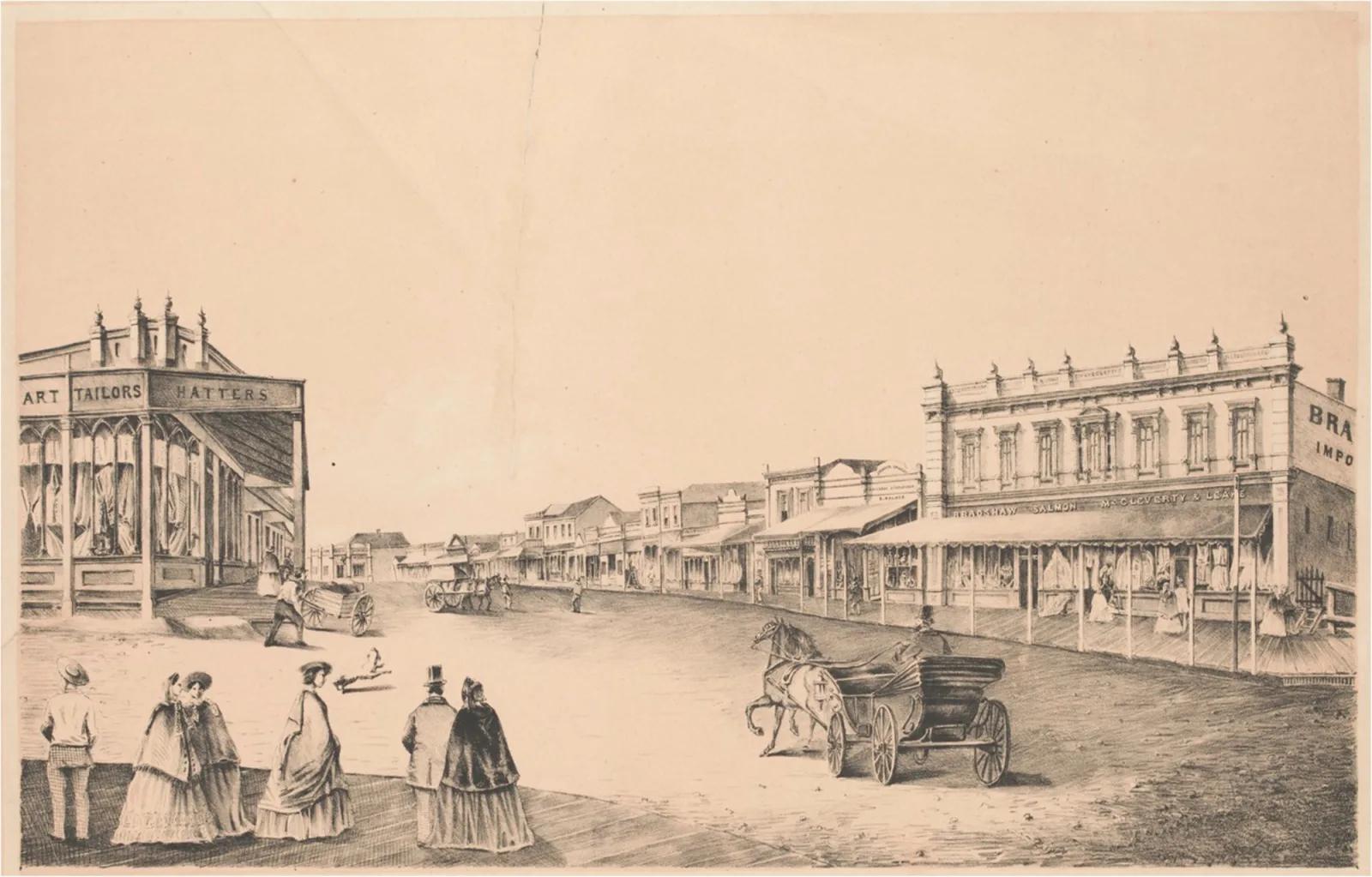
To picture Main Road in its heyday, imagine a vibrant jumble of shops, hotels, and street traders. By 1858, more than 20,000 men and 10,000 women and children relied on the goods and services sold here.
Fashion and finery
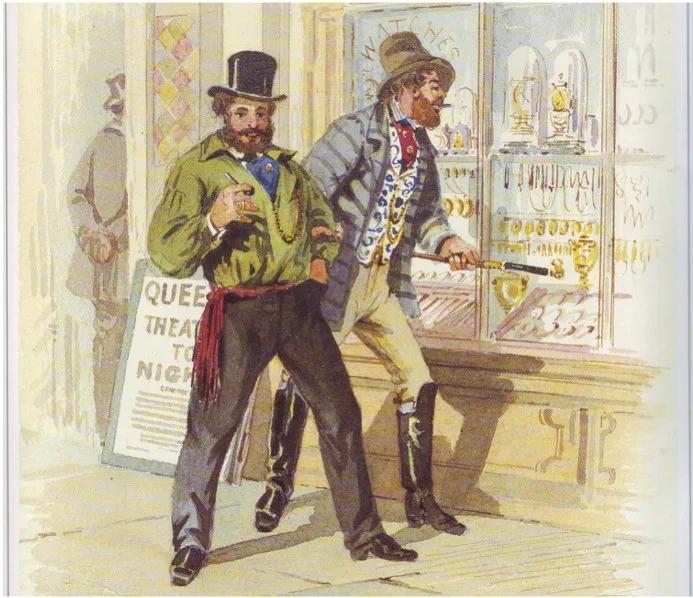
Residents on Ballarat’s goldfields may have roughed it on the diggings, but on Main Road, they could step into another world. The increasing number of people on the goldfields, including women and children, created a demand for a more extensive range of clothing for the fashion conscious beyond the practical attire of the gold seeker. Drapers, bootmakers, milliners, and jewellers displayed their wares in crowded shop windows.
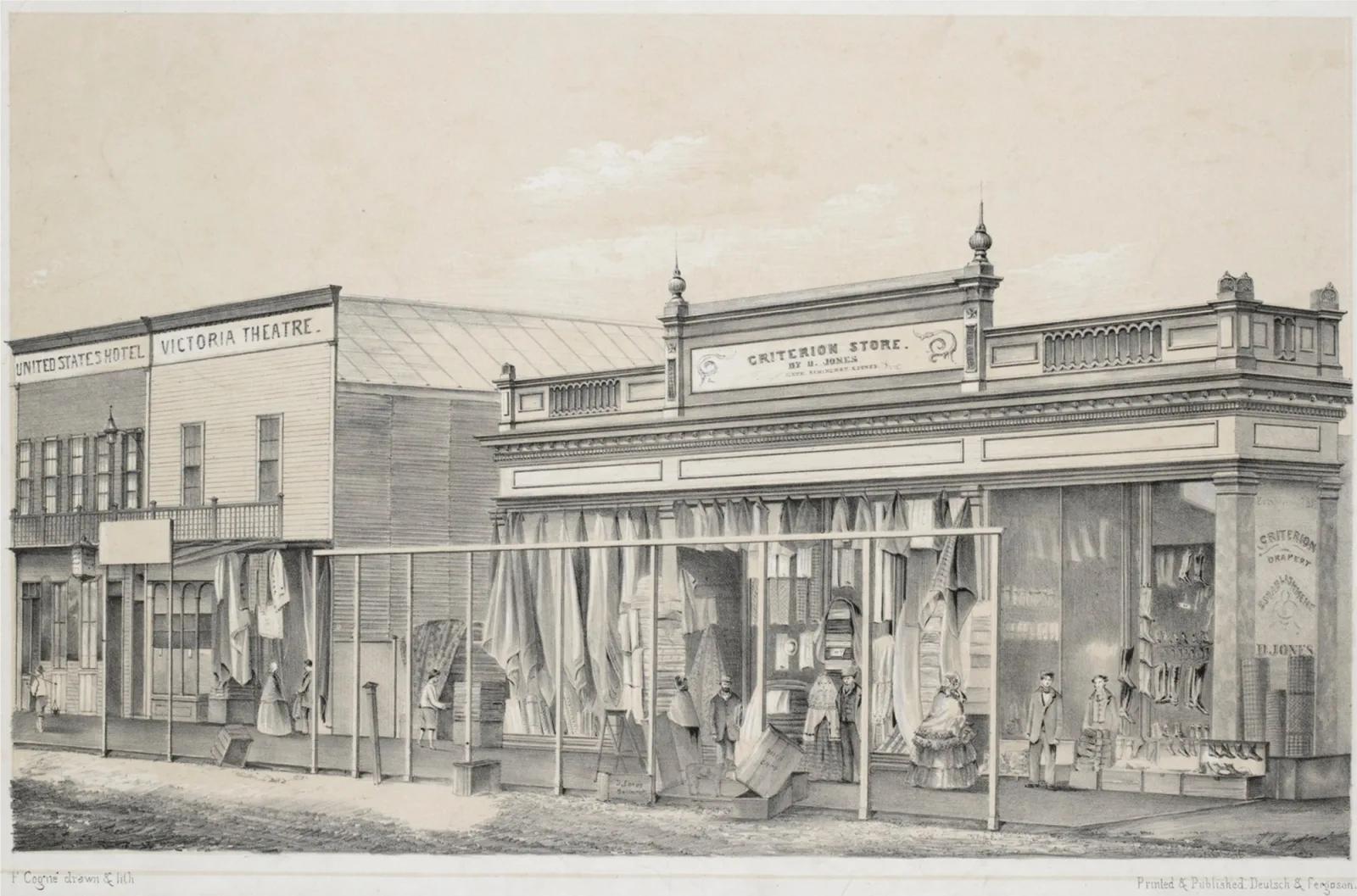
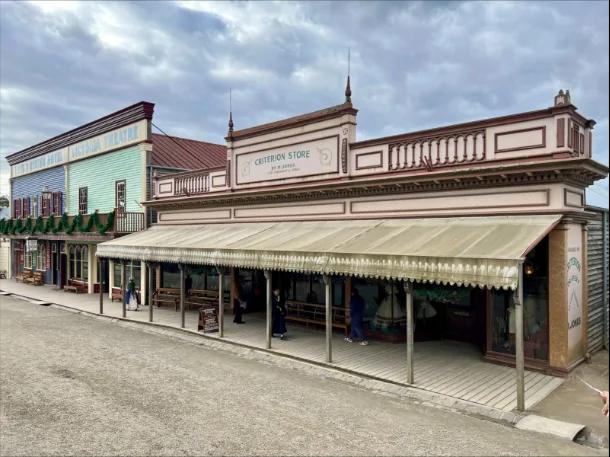
Sovereign Hill’s recreated shops - like Rees & Benjamin and the Criterion Store – capture this side of goldfields life, where prosperity could be shown off in the cut of a suit, a brand new dress, or the shine of a gold watch.
Food and drink
Keeping thousands of mouths fed was no small feat. After surviving on a limited diet of mutton and damper at the start of the gold rush, it is no surprise that the goldfields population was desperate for variety – and hungry for a few sweet treats.
Much of the available produce was imported and transported to the goldfields, which was a costly endeavour. However, the increasing presence of bakers, confectioners, and brewers on Main Road showed the beginnings of locally made produce. From daily necessities to luxuries, the road kept the goldfields population well supplied.
Hospitality and entertainment
Hotels were a surefire business opportunity. By 1858, Main Road boasted 35 hotels, along with boarding houses, concert rooms, and even cigar divans.
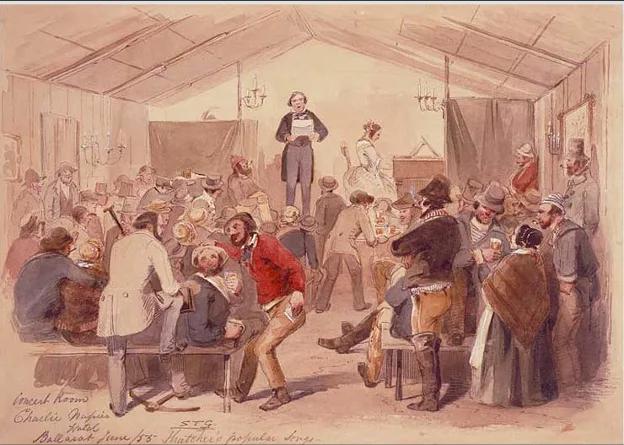
Hotels kept gold seekers supplied with the comforts they craved after a long day’s toil - strong drink, a hot meal, and a bed far warmer than any tent. For those still chasing fortunes further away, they offered a welcome stopover. Along Main Road, hotels thrived on their prime location, perfectly placed to greet new arrivals from Geelong and Melbourne. Ever resourceful, some - like the Charlie Napier Hotel - set up beside coach line booking offices such as Universal Transit Office, while others went a step further, incorporating ticketing services into their own operations.
The hotel owners along Main Road were nothing if not entrepreneurial - always coming up new ways to draw in patrons and boost their profits. Many transformed their establishments into lively hubs of entertainment, adding concert halls, skittle alleys, boxing saloons, and even theatres.
Some hotels saw a different opportunity - the growing need for social spaces where community groups could gather. Their doors and rooms opened to friendly societies, charitable groups, and sporting clubs. With Ballarat East yet to build its own town hall, even the local council operated out of the Duchess of Kent Hotel. Hotels also doubled as venues for coroner’s inquests, adding a more sombre layer to their role in community life. Some establishments became cultural hubs too, drawing in patrons of a shared nationality when the publican hailed from their own homeland.
Home-making and building
For home-making and building, there were warehouses selling china, glass, and ornamental goods, furniture stores with imported stock, timber merchants, and ironmongers. Carpenters, joiners, glaziers, painters, upholsterers, tinsmiths, smiths, and tentmakers worked along the road, ready to build, repair, and furnish.
François Cogné’s Main Road
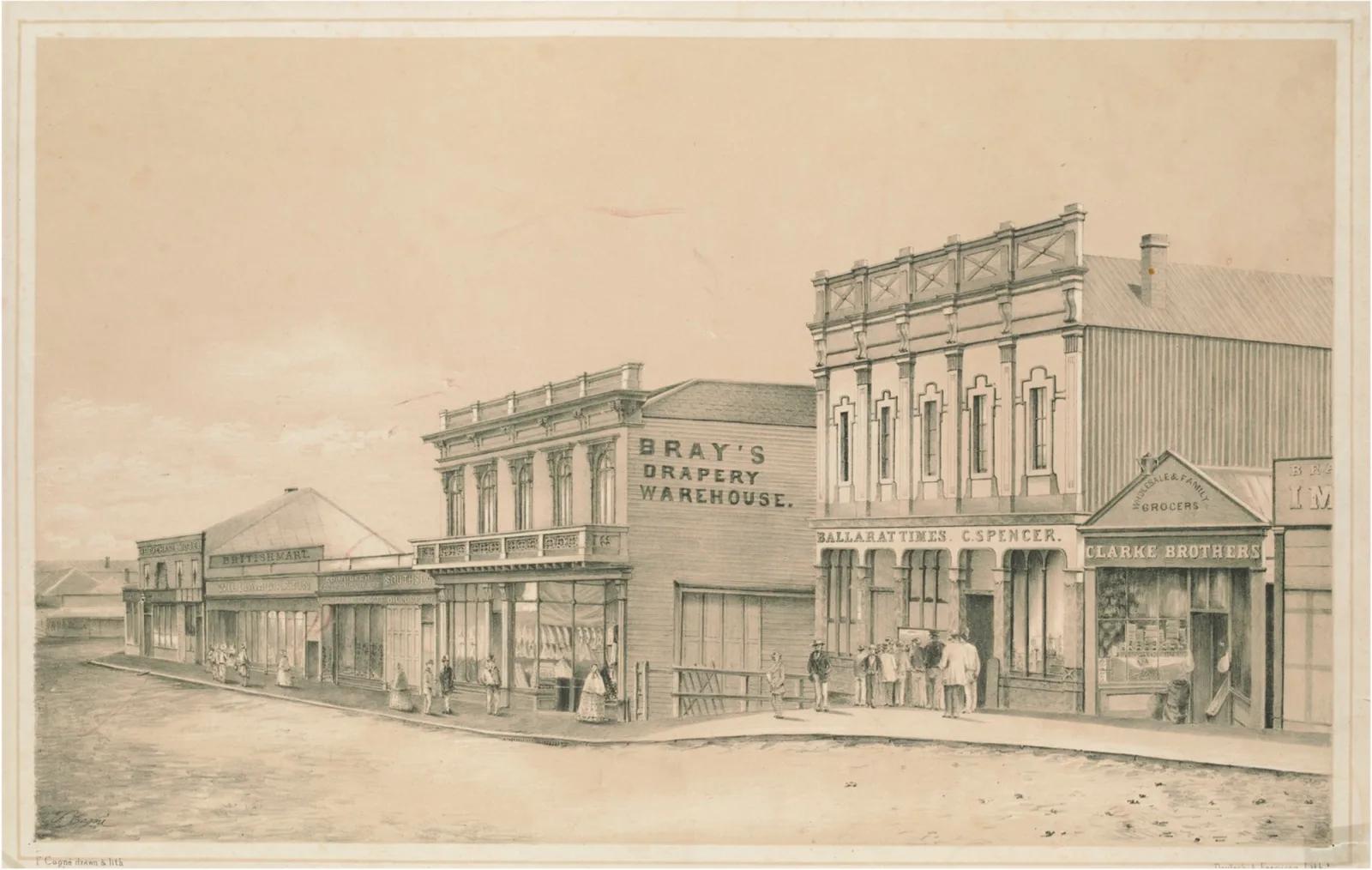
We don’t have to imagine Main Road entirely — we can see it through the eyes of François Cogné, an artist and lithographer who created a series of views of Main Road Ballarat East in 1859. His lithographs show the very businesses and activity that made the road thrive. They reveal the crowded shopfronts, signage, and people that defined the road.
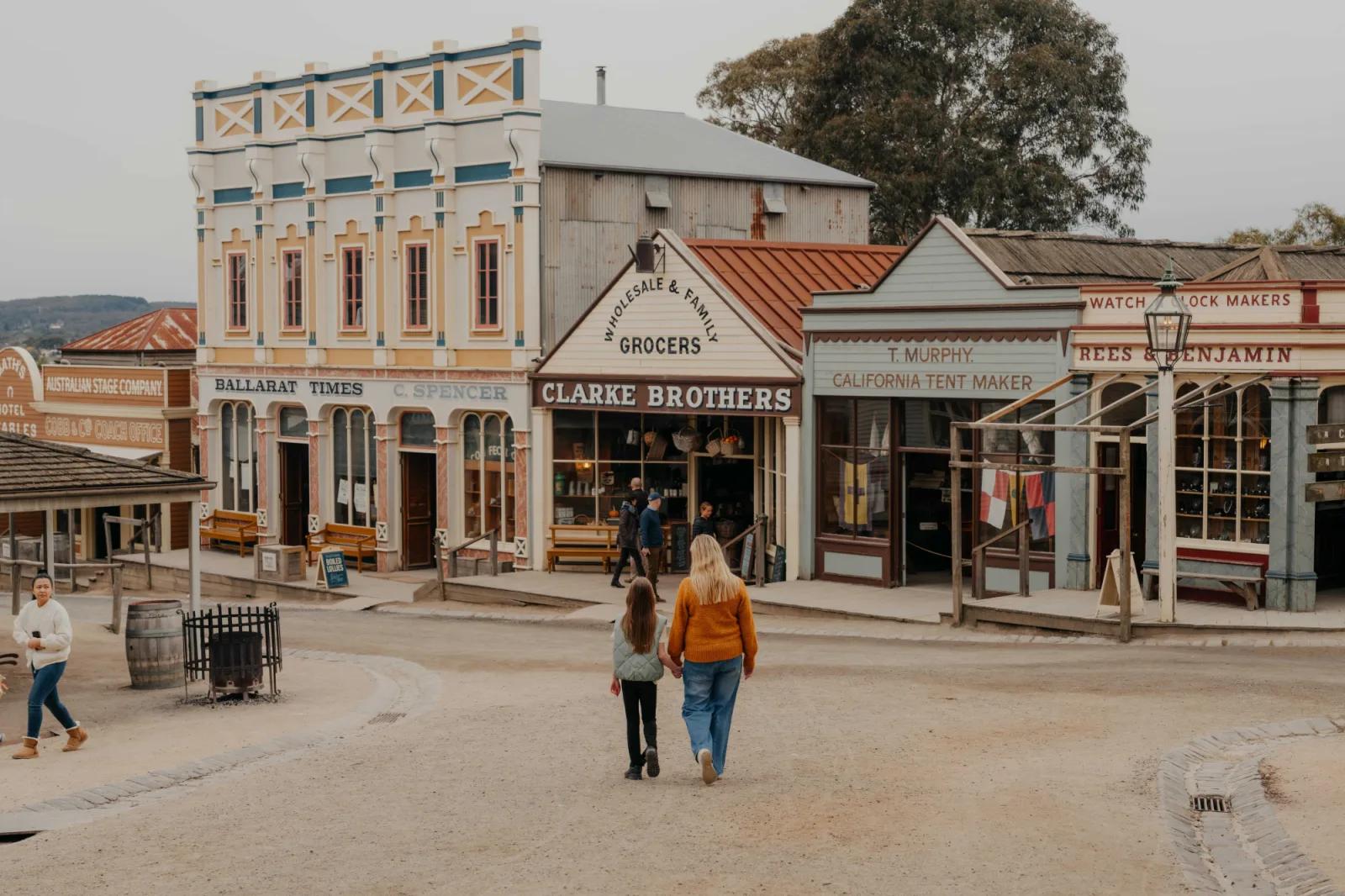
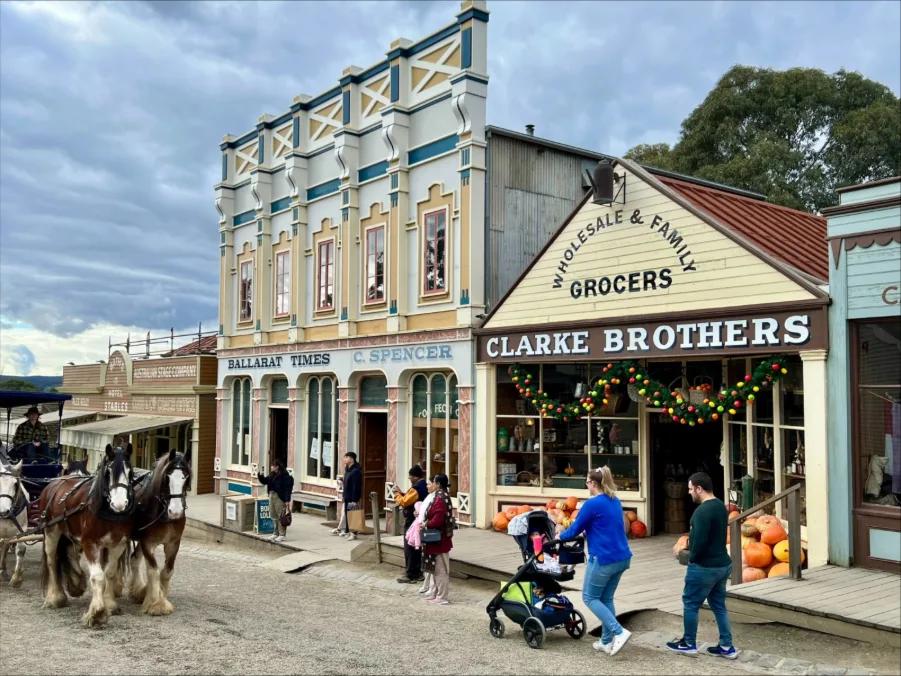
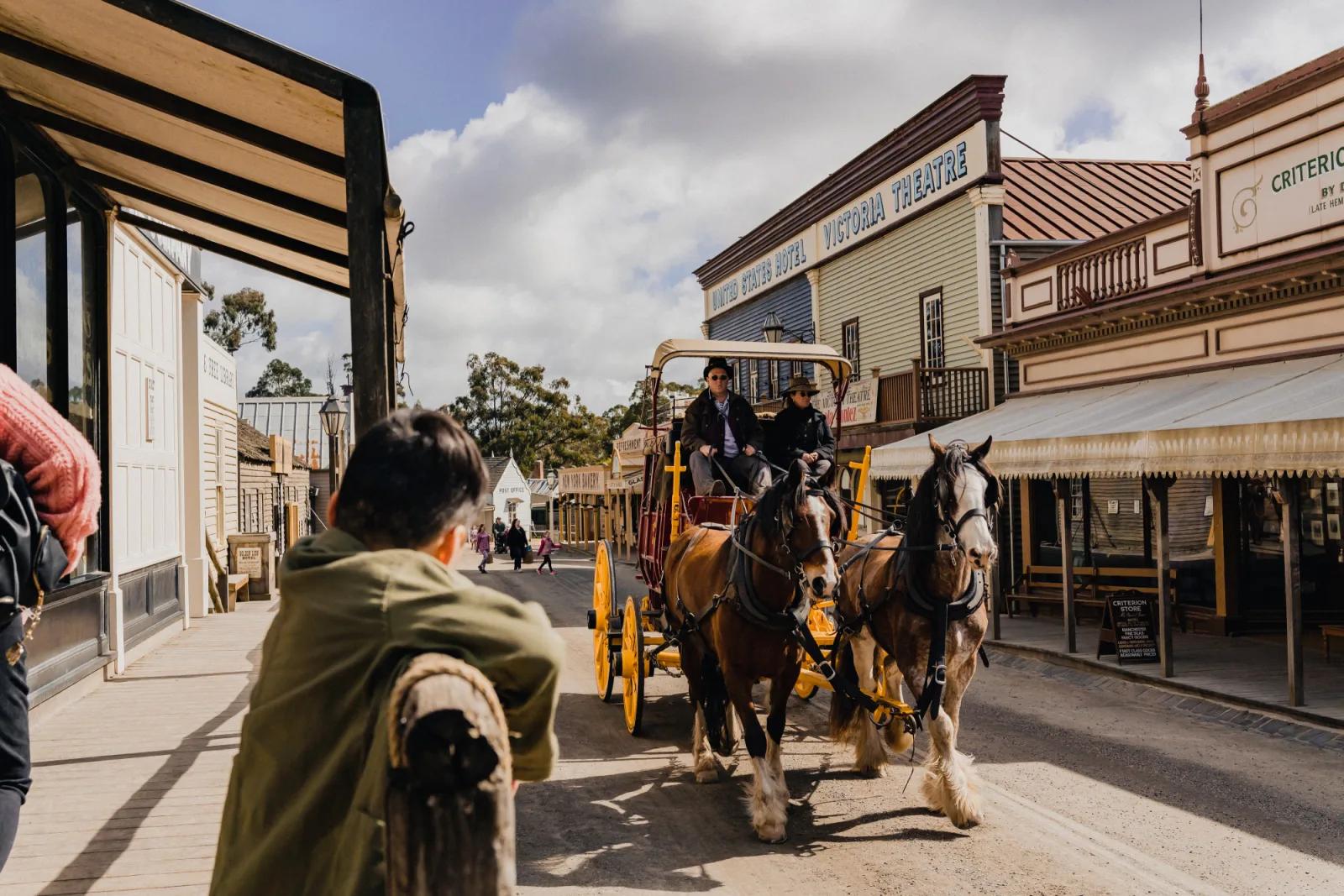
These lithographs have been used to recreate parts of Sovereign Hill’s Main Street, including iconic buildings such as the Criterion Store, the Ballarat Times Office, Clarke Bros Grocers, the United States Hotel and Victoria Theatre amongst others.
His views preserve the lively, crowded scene of Main Road, and when visitors walk down Sovereign Hill’s Main Street today, they are seeing those scenes brought back to life.
The dark side of the boom
But Main Road’s story wasn’t all prosperity. Success came with challenges.
The menace of sludge
While gold mining brought business to Main Road it also created constant problems with sludge — the waste from puddling machines and sluicing, which consisted of sand, clay, gravel, and water.
The sludge problem in Ballarat East began in 1856, when gold seekers started intensively reworking old ground. With more puddling machines and extensive ground sluicing in use, the by-product was inevitable – sludge and plenty of it.
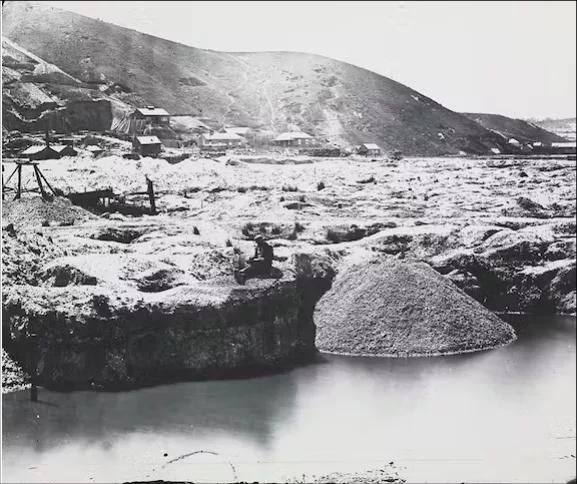
Sludge sat in wash pools and sludge dams behind either side of Main Road. Miners also dumped unwanted sludge into old waterways like the Yarrowee River and Canadian Creek, as well as into poorly constructed channels that fed into them. These creeks and channels ran close to – and sometimes intertwined with – Main Road itself. Sediment quickly built up, choking the waterways.
When the heavy rains came, the dams and waterways overflowed, sending torrents of sludge flooding down Main Road. The sludge covered footpaths, flooded buildings, blocked access to shops, damaged shop goods and sometimes forced businesses to close until it was cleared. Ballarat, already prone to flooding due to its basin-like setting, became even more vulnerable. Between 1855 and 1861 alone, the town endured at least six major floods.
Sludge is rolling down, like a lava-tide, upon the cities of Ballarat and Sandhurst [Bendigo], threatening to submerge them, like Pompeii or Herculaneum - Geelong Advertiser, 1859
Sludge was a local problem with a wide impact — mining waste affected three-quarters of Victoria’s rivers, and no simple solution was at hand.
Fires on the goldfields
If sludge was a creeping threat, fire was an explosive one. Main Road’s timber buildings stood tightly packed, and fire was used daily for cooking, warmth, and lighting. Together, it was a recipe for disaster. Between 1855 and 1861, there were nine separate blazes along Main Road.
The fires brought devastation on every front — claiming lives, inflicting serious injuries, and destroying property, goods, and entire buildings. At times, whole sections of Main Road were lost to fire.
Some demonstrated an amazing capacity to seize an opportunity out of misfortune.
In December 1855, a fire broke out at the United States Hotel. The fire destroyed the United States Hotel as well as several other buildings and took several lives including the life of Albion Nichols, one of the owners of the United States Hotel.
Americans, Henry Moody and Rufus re-built the United States Hotel and the Victoria Theatre, (which replaced the Adelphi Theatre) on the same spot.
The new establishment was completed within a short period, some sources say 15 days others say three weeks, during which Moody and Smith, set up a bar among the ashes of the old building to take advantage of thirsty sightseers.
Main Street today
Sovereign Hill’s Main Street re-creates this remarkable period. It draws on records of businesses, including the lithographs of François Cogné, and the stories of growth, challenge, and resilience that defined Ballarat East in the 1850s.
Main Road was a place of rapid expansion, thriving trade, and constant threats. Above all, it was the lifeline of a goldfields community — and today, you can experience it at Sovereign Hill.
You might also be interested in


